Eleven scholars of the Global Sponsor A Student Programme have achieved academic excellence at the College of Medicine, University of Ibadan, through professional examination distinctions and outstanding grades. They explain, in their own words, what the support made possible.
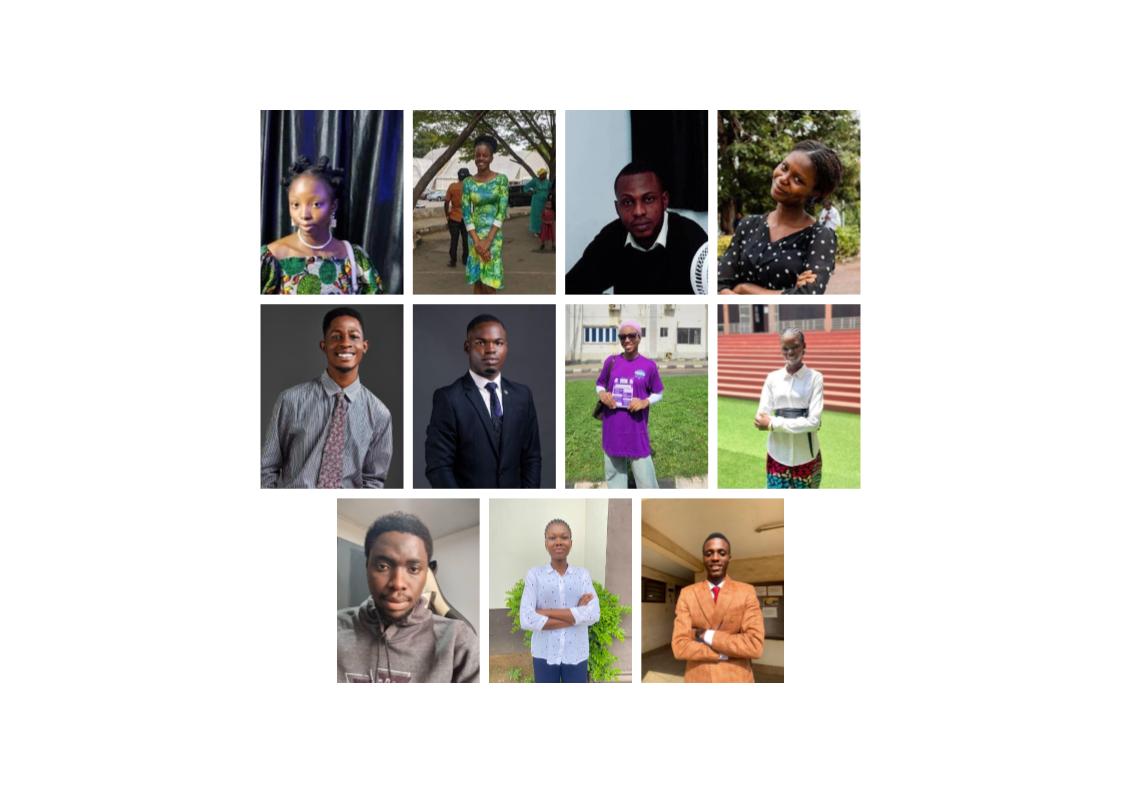
Some years ago, a simple idea took root at the College of Medicine, University of Ibadan. That a student with the ability to become a doctor, dentist, nurse or physiotherapist should not be lost to a school fee. There was no fanfare, just a scholarship scheme, a list of names and a promise to carry the cost of tuition and upkeep. Then the seasons turned. Today, eleven scholars have achieved distinction-level success or outstanding examination grades. One, a physiotherapy student, sometimes cooks his own meals during examination week because buying food is beyond his budget. Another was “almost at the verge of taking a gap year just to work and save up.” A third is a dentistry student whose mother paid for his education on her own.
The scheme is the Global Sponsor A Student Programme (G-SASP), conceived by Professor Olayinka Omigbodun FAS, the 12th Provost of the College, to support students from low-income backgrounds with tuition, the Health Professional Training Levy, accommodation and personal upkeep. Since its inception, G-SASP has supported 360 students.
Last August, G-SASP told the stories of the first four (From Dreams to Distinctions). Here are all eleven:
- John Akalo Ogheneyole, Medicine (MBBS), 300 Level, with distinctions in Physiology and Anatomy, MB Part I (2025)
- Victoria Elegbede, Medicine (MBBS), 300 Level, with distinction in Anatomy, MB Part I (2025)
- Oluchukwu Divine-Gift Ndubueze, Medicine (MBBS), 300 Level, with distinction in Anatomy, MB Part I (2025)
- Ibukunoluwa Morountonu, Medicine (MBBS), 300 Level, with distinctions in Physiology and Anatomy, MB Part I (2025)
- Abdulhameed Oluseyi Qazeem, Medicine (MBBS), 300 Level, with distinction in Anatomy, MB Part I (2024)
- Adeola Adekojo, Medicine (MBBS), 300 Level, with distinction in Anatomy, MB Part I (2026)
- Damilare Oluwo, Dentistry (BDS), 500 Level, with distinction in Oral Biology, Part IV BDS (2026)
- Taiwo David Oyindamola, Physiotherapy, 400 Level, with eight As (2026)
- Tomiwa Adesina, Physiotherapy, 400 Level, with seven As (2026)
- Christian Omojolajesu Olorunfemi, Physiotherapy, 400 Level, with eleven As (2026)
- Joseph Boluwatife Oluwaseun, Nursing, 400 Level, with seven As and three Bs (2026)
What Money Was Taking Away
Ask these students what money was costing them before G-SASP, and they rarely start with the fee. They start with time.
John Akalo Ogheneyole, whose mother is a market trader, puts it bluntly. “I was involved in lots of meager jobs just to survive, and it was affecting me academically, emotionally, and mentally.” When the scholarship came, “I was literally almost at the verge of taking a gap year just to work and save up.”
Victoria Elegbede worked as a makeup artist to pay her own way and, despite a 4.0 GPA in her first year, feared that her dream of becoming a doctor would slip away.
Taiwo David Oyindamola freelances as a graphic designer, though the work is not steady. “During examinations, I sometimes have to prepare my own meals because I cannot afford the convenience of buying food,” he says. “Basic necessities sometimes compete with the attention I need to give my studies.”
Damilare Oluwo, a dentistry student whose mother carried his expenses alone, says examination preparation “is not the time you want to spend time worrying about what to eat or how to meet the financial demands of your preparation.”
Adeola Adekojo’s tuition is covered by NELFUND and her parents handle her upkeep, but “every naira that went into my upkeep competed with other commitments, like my younger siblings’ education, hospital bills and house rent.”
Not every account is one of hunger. Abdulhameed Oluseyi Qazeem has not faced severe hardship during examinations, but “financial uncertainty has been a potential concern throughout medical school.” Uncertainty weighs too.
What the Support Gave Back
Taiwo received the scholarship in 200 Level, and has not had to worry about school fees since. “To me, GSASP is more than financial assistance; it is an opportunity that has helped me remain in school and continue pursuing my dreams with greater peace of mind.”
Damilare “was able to increase my study hours.” Adeola’s allowance paid for quality meals, personal items and transport for examination registration. “Without extra support, I would likely have had to take on side jobs, which would have pulled my attention away from my studies.”
John, who once weighed a gap year, could now “give my 100% into my academics, which made the distinctions possible by the grace of God.” Victoria calls the support “life-changing.” “The financial support gave me the peace of mind to concentrate fully on my studies.”
Oluchukwu Divine-Gift Ndubueze’s story tests the idea hardest. Her mother is a widow, her brother was already in school, and in 200 Level a severe illness forced her into four weeks of medical leave. With G-SASP support, she could focus completely on catching up. “This success was not just the result of hard work, but of resilience, and the unwavering support I received from those who believed in me,” she says.
For Ibukunoluwa Morountonu, a scholar since 2023, the support “has been instrumental in my academic success.”
Joseph Boluwatife Oluwaseun, a nursing student who became a beneficiary this year, calls having his fees covered “a tremendous relief to both me and my family.” Tomiwa Adesina agrees. “GSASP has been a great blessing to me and my family. It has allowed me to focus more on my studies without putting too much pressure [on] myself and my family.”
The Work Was Still Theirs
Nobody here claims the scholarship sat the examinations for them.
Abdulhameed is the first to say success has not been a straight line. “My first continuous assessment in medical school was around 52 per cent.” He sought advice from senior colleagues, adjusted, and finished joint best in Pharmacology in his class. “That experience taught me that an early setback does not have to determine the final outcome.”
Two weeks before her examination, Adeola lost every file and past question on her laptop. “At first it felt like everything was over,” she says. She got through by joining a communal study circle “where materials circulated easily.”
Damilare spent three years at home before gaining admission, and says the lessons of that period sharpened his approach. “I have always believed in exceptional performance.”
Joseph leaned on friends; Taiwo studies alone, late into the night, and starts early in the semester. The result for Taiwo was eight distinctions in the 2025/2026 first semester, “an overwhelming experience filled with gratitude and renewed motivation.”
Who Was Waiting at Home
“I wanted my mother to be called the ‘mother of a doctor,’” Damilare says. When his result appeared on the class group, he was “speechless, and all I could say was, ‘Thank You, Lord.’”
Abdulhameed grew up watching his father, a medical doctor, run a practice attached to the family home. He was with his father in the living room when the Anatomy results came out. “I screamed with excitement, and we celebrated together.” Then he adds, in a line that is hard to read without pausing, that “this was the only MB examination I had written while he was alive.”
Adeola’s news came “at a point when something more crucial than my education seemed to be falling apart.” Her lesson for others is simple. “Your journey is unique, and it shouldn’t feel borrowed from someone else’s.”
Already Giving Back
Several of the scholars are giving back before they graduate. Adeola’s NephroLens project, under the Millennium Fellowship, has reached more than 500 people with chronic kidney disease awareness. Taiwo has helped over 80 teenagers gain admission into university and is preparing to establish the Mantle Raising Destiny Foundation. Physiotherapy was not even his first choice. “What started as an alternative eventually became a profession I have grown to love.”
Damilare hopes to work in community-based training and academia. Joseph wants to be “a nurse who sees the person behind the illness” in mental health. Abdulhameed, with about 18 months of medical school left, is aiming for surgery and hopes to become “a competent and compassionate doctor who makes a meaningful contribution to healthcare, particularly in Nigeria.”
The Seed
Behind these achievements stands a community of sponsors and partners whose collective generosity helps students pursue their education. Damilare speaks to these supporters directly.
“Look at the impact of your seed in my life. It has germinated, and I am more than grateful that it has not gone to waste.” Damilare Oluwo
Adeola sees the seed travelling further. “It is an exponential way to improve the world by sowing one seed,” she says, because the students sponsors keep in school will one day serve patients and communities of their own. Taiwo explains the motive behind giving.
“you do not give simply because you have; sometimes, you give because you understand what it feels like to have nothing.” Taiwo David Oyindamola
Joseph thanks the sponsors this way. “Through this scholarship, you have reminded me that my background and present circumstances do not have to determine the limits of my future.” His advice to students still waiting is practical. “When the GSASP application opens, do not be afraid to apply.”
Dr. Olabisi Oshikanlu, Global Chair of G-SASP, has expressed the programme’s guiding belief: “At G-SASP, we believe that talent should never be wasted because of financial difficulties. Every scholar we support is a future leader in healthcare, and their success benefits us all.” Her message to sponsors is equally clear:
To All Our Valued Sponsors,
“You invested not because success was guaranteed, but because potential deserved a chance. Through every season, you believed, gave, and stayed the course.
Today, our scholars’ achievements speak for themselves. Your investment has become their opportunity, and their excellence is your legacy.”
Thank you for making it possible. Dr. Olabisi Oshikanlu, Global Chair, G-SASP
The season is still turning. Abdulhameed has about 18 months to go. Taiwo has a foundation to build. Adeola’s campaign is still counting. Each story is still unfolding.
What do these eleven scholars tell us? Talent was never the problem. It was already there, in market stalls and rented rooms, in kitchens where a student cooks dinner on the eve of an examination. What was missing was someone willing to say, “You will not carry this alone.” Since its inception, G-SASP has supported 360 students, and there are many more whose potential deserves a chance. The future of healthcare in Nigeria can be strengthened through ordinary acts of generosity: one sponsor, one scholar, one year of fees at a time. These scholars show what becomes possible when ability meets opportunity. Their achievements are a beginning, not an ending.
To learn more about G-SASP or support a student’s education, visit www.g-sasp.com